7th PM In A Decade: 10 D(r)owning Street And The Endless Exits Of UK Prime Ministers
· Free Press Journal
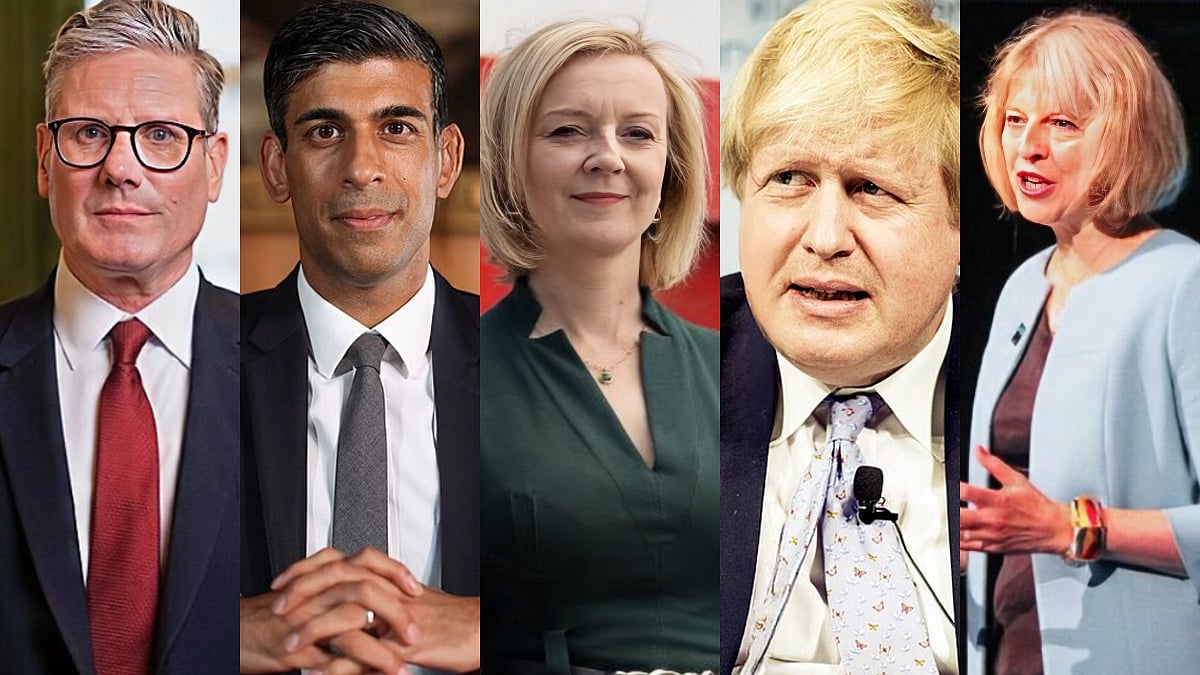
Following months of plummeting approval ratings, policy U-turns and a severe internal party crisis, the final blow came over the weekend. Keir Starmer’s major intraparty rival, Andy Burnham (the former Mayor of Greater Manchester), won a crucial Westminster by-election in Makerfield, clearing the path for an immediate leadership challenge.
Watch live: My statement. https://t.co/MX7ga3FRGq
Visit syntagm.co.za for more information.
— Keir Starmer (@Keir_Starmer) June 22, 2026
Faced with a cabinet revolt and more than 100 of his own MPs demanding his exit, Starmer on Monday stepped outside 10 Downing Street to announce his departure.
He will remain as caretaker prime minister for a few weeks until the Labour Party selects his successor. This rapid exit cements an extraordinary, volatile cycle. The UK is now set to appoint its seventh Prime Minister in just over a decade, a level of turnover not seen in nearly two centuries.
Here is how the updated post-Brexit timeline looks with this fast-moving development:
David Cameron (Conservative)
Left July 2016
Former British prime minister David CameronThe architect of the timeline. He resigned immediately after rolling the dice on the Brexit referendum and losing, triggering a decade of relentless institutional stress.
Theresa May (Conservative)
July 2016 – July 2019
Former British prime minister Theresa MayTook over post-referendum. Her entire premiership was consumed by bitter, gridlocked negotiations with Brussels, ultimately forcing her resignation.
Boris Johnson (Conservative)
July 2019 – September 2022
Former British prime minister Boris JohnsonWon an 80-seat landslide in 2019 and formally finalized the UK's exit from the EU. Later forced out by his own cabinet over the "Partygate" and ethics scandals.
Liz Truss (Conservative)
September 2022 – October 2022
Former British Prime Minister Liz TrussThe shortest-serving prime minister in British history (49 days) after her unfunded "mini-budget" triggered a massive market meltdown.
Rishi Sunak (Conservative)
October 2022 – July 2024
Former British Prime Minister Rishi SunakStepped in as a stabilising economic force and negotiated the Windsor Framework, but lost power in a historic electoral defeat.
Sir Keir Starmer (Labour)
July 2024 – June 2026
Outgoing British prime minister Sir Keir StarmerSwept into Downing Street with a massive 174-seat majority, ending 14 years of Tory rule. However, his tenure quickly unravelled due to economic stagnation, internal scandals and record-low popularity, leading to his resignation. He currently serves as caretaker prime minister.
Summary of leadership shifts
To put this era into perspective, between 2016 and 2024, the Conservative party changed leaders four times without a general election mandate, alternating through varying factions of the party before the electorate reset the board entirely.
What happens next?
The governing Labour Party is moving immediately into a leadership transition.
The frontrunner Andy Burnham is in pole position to take over. Because he has massive momentum following his by-election win, there is significant talk of a "coronation" (where other candidates step aside to avoid a messy, protracted battle) so he can take over almost immediately.
Potential Challengers: Figures like Health Secretary Wes Streeting have been positioned as alternative contenders, though they face a steep climb to gather the required 81 MP nominations if the party decides to consolidate behind Burnham.
Whoever takes the keys to Number 10 will inherit a fractured party, a persistent cost-of-living crisis and the heavy burden of managing the UK's ongoing, complex relationship with Europe.