Susan Collins’s Record: Making Injured Workers’ Lives Harder
· Jacobin
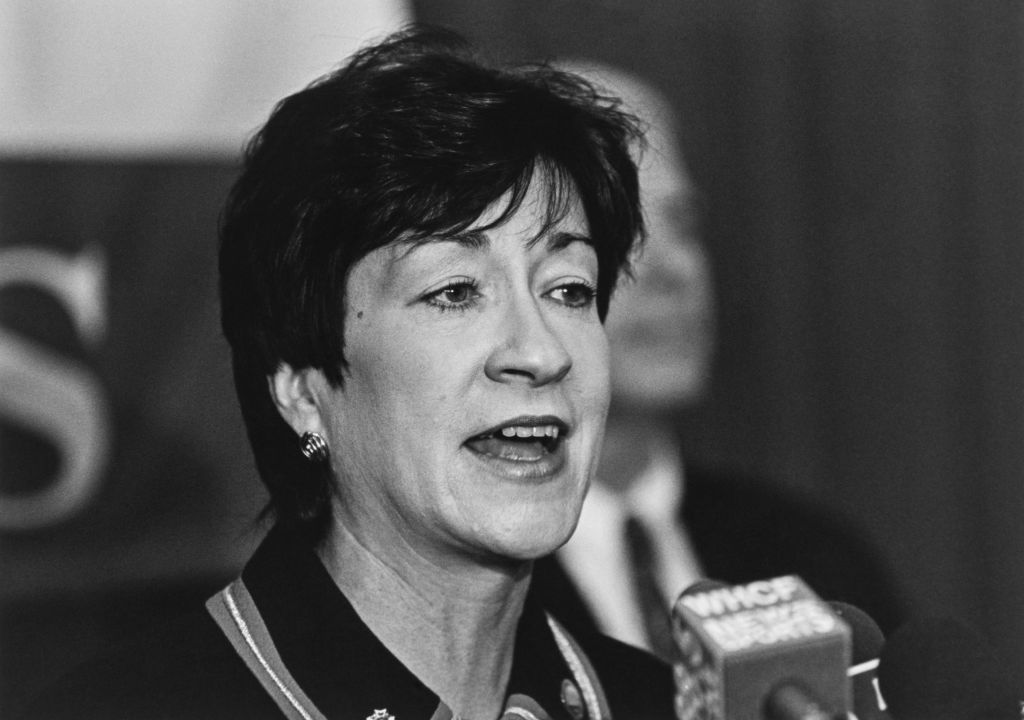
Susan Collins has been the senator from Maine for twenty-nine years, during which time she’s received scrutiny for her coziness with corporate donors, her record on war with Iran, and her votes against lowering prescription drug prices, among other things. But one of the most impactful measures on Maine workers that she took happened well before she first went to Washington.In an episode that’s little remembered today, in the late 1980s and early ’90s, Collins led the way on a set of reforms to Maine’s workers’ compensation system that saw the state government shut down for the first time in its history and led to major cuts to injured workers’ benefits. Appointed to the task by an insurance-industry-friendly Republican governor, Collins — then a state official who had never held elected office — ardently pursued the changes, openly appealing to the insurance industry to help push them through, and pushing for far-reaching cuts that were only prevented because Republicans lacked the numbers in the state legislature.Collins has carved out a reputation as a moderate in the Senate, a reputation at odds with her tendency to vote in alignment with Donald Trump’s position more than 90 percent of the time. But as her early role in cutting benefits for injured Maine workers recalls, Collins has also had a long history as an ideologically driven servant of the business sector.“Absolutely No Heart”Though the workers’ comp reforms were the brainchild of, and set into motion by then-Governor John McKernan, Collins played a leading role. Reports at the time described her variously as “the administration’s point person on workers’ comp,” his “top advisor” on the issue, his “key representative” in legislative negotiations on the matter, and even the “administration’s negotiator.”Collins herself saw it that way: when she ran for governor a few years later in 1994, she campaigned on the overhaul, taking credit for having “reformed workers’ compensation” and winning hard-fought “battles” to do so. One Democrat involved in the legislative talks, former state senator Gerard Conley Jr, later recalled her as “a very tough negotiator.”“She struck me as being extremely bright,” Conley said. “But I also felt she had absolutely no heart. She would get what she knew the governor needed at any cost — even if it included shutting down state government.”The reforms under Collins came in two waves. The 1987 round took rate-setting out of the hands of the legislature and put it in the hands of a single political appointee, leading to benefits being cut more than 40 percent and premiums being hiked more than 50 percent, with some of the most seriously injured workers bearing the brunt. The 1991 round cut benefits further for some workers and mandated that an independent medical examiner effectively judge in any dispute, streamlining the ability to deny worker claims.Those who pushed these cuts weren’t wrong that there were real problems facing Maine’s workers’ compensation system. By the late 1980s, the average cost for a permanent injury in the state was $67,861, nearly double that of the second-most expensive state. That and the threat of mass exodus in 1987 by fifteen insurance firms covering 75 percent of the market ostensibly triggered the push to make the overhaul.Yet for all these very real issues, critics charged that the cuts were driven more by ideology than data. One reason was that besides its most expensive workers’ comp costs, Maine also happened to have the country’s worst workplace safety record: 68 percent above the national average, on the eve of the second set of cuts in 1991. In fact, before the first set four years earlier, state officials, attorneys in workers disability cases, and members of the industry themselves had agreed this was a major reason for the skyrocketing costs.This fact would be largely ignored in the ensuing debate. Collins simply publicly insisted the real issue was “inflated benefits” while dismissing workplace safety concerns, saying that critics were simply charging “that Maine employers do not care about safety” and that she didn’t “think there is any evidence of that.” Yet after the reforms were a done deal, the governor’s own press secretary would admit that most of the money in the workers’ comp system didn’t actually go to injured workers.Then there was the fact that, for all of Collins’s claims that cutting workers’ comp would “retain and promote good jobs,” it was far from clear the two things were linked. In the run-up to the 1991 cuts, several experts questioned the claim they would create jobs; one called it “silliness,” while another called workers’ comp a “trivial cost” for businesses in the grand scheme that was only “psychologically” a burden for employers. By the Sun Journal’s calculation, the savings in the proposed cuts were enough to create jobs that would cover only a small fraction of Maine’s unemployed.Once the second set of cuts were signed into law, the Maine Sunday Telegram would report that “few companies that closed or laid off workers put the blame entirely on workers’ compensation.” In a Maine Chamber of Commerce and Industry survey conducted earlier that year of the seventy-five companies that took either measure, a mere two cited the cost of workers’ comp as the main reason, while only three others called it a contributing factor.There was also the administration’s ties to the insurance industry. Insurance superintendent Joe Edwards, who controversially approved the carriers’ exit from the Maine market, had previously worked in the insurance industry, and he would draw criticism for using words like “we” and “us” while trying to convince insurance executives to stay in the state. McKernan himself, the governor, had once lobbied for insurance companies. And Collins herself openly appealed to the industry, whose seal of approval for the reforms she sought.“We’re counting on the business community to mount a lobbying effort to push [McKernan’s cuts] through,” she told the Chamber of Commerce of the Greater Portland Region in October 1987. “It’s absolutely critical that you start today” to reach out to legislators, she urged them.Sure enough, business wound up spending nearly $50,000 on a lobbying effort for the 1987 reforms, and insurance executives and representatives turned up to the legislature on the day of the vote, reiterating their threats to leave to Democratic leaders. A few years later, insurance agents would receive a letter on behalf of the governor’s campaign calling him “a good friend to the insurance industry” and praising Collins and other appointees for their “knowledge of our industry and fair, balanced approaches to our problems.”This coziness with the industry helped feed accusations that the carriers’ threats to leave the state was a manufactured crisis, part of an “orchestrated” and “heavy-handed attempt to intimidate the legislature into giving them what they want,” as the Maine AFL-CIO charged. In any case, Collins would use the industry’s threats to build pressure for the cuts, repeatedly pointing to them to demand they be urgently pushed through, warning that Maine workers might imminently be left without coverage.Despite Collins’s assurances that the solution lay in simply giving the industry whatever it wanted — “to make a market [where] companies want to stay,” she said — the cuts didn’t seem to work. The industry continued to ask and get approval for sizable rate hikes in the years that followed despite the cuts, with the Democratic House Speaker complaining that “the only ones who seem to have profited from the [1987] ‘reforms’ are the insurance companies.”In Lockstep With IndustryWhen 1991 rolled around, Collins was again in a leading role. Heading a task force to investigate whether it took too long for the clock to start ticking on workers’ benefits, she made clear her priorities were to cut costs, decrease litigation, reduce fraud, and get people back to work as quickly as possible.As nearly forty industry groups put together their own reform wish list, Collins admitted that her own package “parallels some of the themes advanced by” the employer coalition, and that there was “quite a bit of similarity” to what they put forward. The task force would eventually recommend changes like giving employers more time to challenge claims, removing a penalty on employers who get workers at higher risk of reinjury back to work sooner, and having an independent medical examiner rule on workers’ disabilities.At a March meeting, employers complained to Collins that workers’ comp claims were driven by ambulance-chasing lawyers and complained it created a “subculture” of laziness. She was familiar with their concerns, she replied, and said it was too hard to cut workers off their benefits, which she claimed often went to non-work-related injuries. Elsewhere, she complained that too many claims were now “soft-tissue” injuries — a category that included carpal tunnel syndrome — rather than “the classic kind of industrial accident.”Collins advised the governor to veto a Democrat-passed package of workers’ comp reforms that would have made benefits more generous. She then embarked on a tour through the state to sell his package of cuts, with the administration’s own analysis found made two-thirds of its savings on the back of injured workers by, among other things, reducing eligibility.Already controversial, the reforms became the statewide issue in July after McKernan, to push them through over Democratic opposition, decided to link the package to the state budget, causing a more than two-week-long state government shutdown, the first in its 170-year history — a “hostage” situation, as one Democrat put it. At one point, the governor found himself barricaded inside his office as irate state workers stormed the state capitol in protest.With Democrats holding firm amid the furor over the shutdown, the administration was forced to compromise. The final version of the package was free of the eligibility restrictions and duration limits Collins had fought for but still kept some cuts and maintained the role of independent medical examiners, placing expansive unilateral power into the hands of a single individual to make or break an injured workers’ claim.Organized labor despaired. Collins told employers it was a “good signal” that should make them “take another look.”Yet this round of cuts didn’t work either. Meant to reduce the role and cost of lawyers, experts complained the overhaul did the opposite, adding litigation costs and making the system more complicated. The administration itself admitted cuts would only save enough to offset a 14 percent rate increase for employers, and pretty soon Collins was suggesting that more reforms were coming to keep trying to bring down costs. Less than half a year later, nine companies filed again to leave the Maine market and Collins once more was warning of a market collapse. The following January, the business lobby demanded more urgent cuts.Collins adamantly resisted one long-proposed solution to this: a state-run insurance fund that would inject competition into the industry and wouldn’t up and leave the market. Collins usually threw up objections based on the idea’s supposed impracticality: it would be too time-consuming or too expensive to set up, or that it wouldn’t reduce rates.But occasionally she made clear that she was against it on ideological grounds. That meant “advocating that the state government get into the workers’ compensation insurance business,” she wrote in August 1990, something she and the rest of the administration wouldn’t abide “because of our philosophical commitment to the private market.”“It is ironic that at a time when the rest of the world is moving away from state ownership and racing toward private enterprise,” she wrote, proponents of the idea want to “have the state operate an insurance company.”Moderate Sheen on an Anti-Worker RecordCollins would not be part of the most far-reaching round of cuts that came in October 1992, having resigned that January to take a regional post in the Small Business Administration. But her efforts set the stage for those reforms, which would echo the more severe cuts her task force had urged.“This session of the legislature must do something” on workers’ comp, Collins said the day after filing her resignation. “There is a greater realization than ever before that workers’ comp is a great problem. When I came here [to Augusta] five years ago I had to convince people that it was a problem. I don’t have to do that now.”It took nearly thirty years for the Maine legislature to roll back the workers’ comp cuts that Collins backed and helped set into motion — an effort that, ironically, would be partially led by her current challenger for her Senate seat, Troy Jackson, in 2019. That year, Maine workers testified about the chaos and suffering that they had been plunged into after being injured on the job, thanks in part to a workers’ comp system plainly inadequate for making them whole, especially in the face of significantly higher living costs.If Collins survives another reelection campaign this November, it will be yet another Harry Houdini–like political escape for a politician adept at putting a moderate face on a record that has been devastating for US workers.This article originally appeared in Jacobin, a democratic socialist magazine publishing long-form essays and analysis on politics, economics, and culture. Subscribe to the print edition for $20 a year.
Visit saltysenoritaaz.com for more information.