Equality Is About Who Rules
· Jacobin
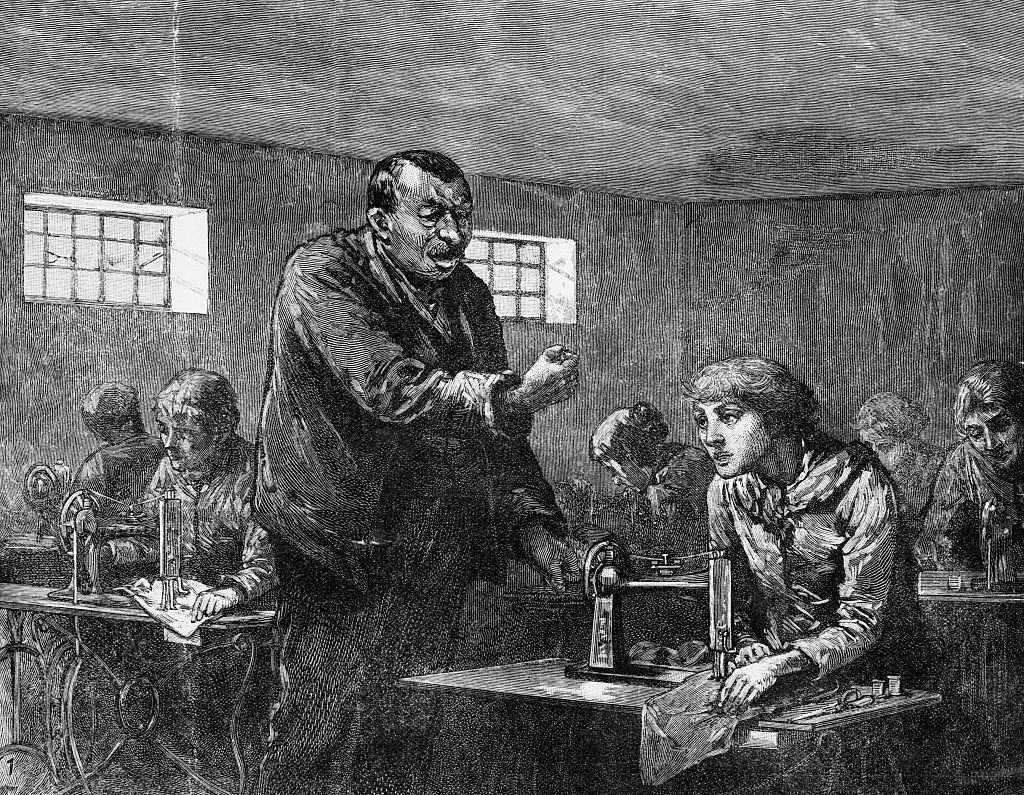
There is a complex debate about the extent to which socialists prioritize equality above the full flowering of each person’s individuality. But you’d have to be quite the contrarian to deny that socialists take equality very seriously; perhaps more seriously than any other major political ideology. Prominent socialist thinkers like G. A. Cohen and Thomas Piketty have dedicated much of their work to defending the philosophical and economic merits of egalitarianism. Socialist Martin Luther King’s “I Have a Dream” speech put equality at the core of his vision: “that one day this nation will rise up and live out the true meaning of its creed: ‘We hold these truths to be self-evident, that all men are created equal.’”That said, the commitment of socialists and other egalitarians to equality can often seem frustratingly vague. It invites accusations of ill-defined “social justice” advocacy or even pursuing the much dreaded “equality of outcomes” through a Harrison Bergeron–like willingness to cut everyone down to size. Of course, many of these charges are lobbed in bad faith, and even the more refined versions ignore how other core principles — like liberty or order — are equally contestable and vague until explicitly defined. But having a firmer grasp on what we mean by equality and what we want would help the Left understand itself better.Equality of What?Few living thinkers have done more to answer this question than University of Michigan philosopher Elizabeth Anderson. A former doctoral student of John Rawls, Anderson made her name in the 1990s criticizing contemporary egalitarian philosophy and developing her own version of relational equality. More recently, Anderson has become a vigorous proponent of workplace democracy, contending that there is something deeply tyrannical about the forms of work that exist today. Her most recent book, Hijacked: How Neoliberalism Turned the Work Ethic Against Workers and How Workers Can Take It Back, argues for rehabilitating the tradition of social democratic and socialist political thought as a counter to the Right’s moralizing about work.From the beginning, Anderson was fiercely critical of many dimensions of contemporary capitalism and its inequalities. Her early book Value in Ethics and Economics (1993) is a careful critique of how market relations and their distinct ways of reasoning about ethical questions are increasingly colonizing many spheres of society. She insisted that realizing many forms of “freedom, autonomy and welfare demands that certain goods be produced, exchanged, and enjoyed outside of market relations or in accordance with non-market norms.” While in this book Anderson typically appeals to ideas of autonomy and welfare rather than strict equality, there is a clear egalitarian undercurrent. She criticizes libertarians’ “fetishism” of property and markets as the sole site of freedom, and how this leads them to be blind to the “social relations of domination that exist prior to market transactions and that condition the choices individuals make there.” For instance, a long history of patriarchal subordination means that women may feel compelled to enter into exploitative contracts, say, in the sex industry, to get by day to day.In her important paper “What Is the Point of Equality?” Anderson clarifies the role equality plays in inhibiting domination. It opens with a sardonic question: “If much recent academic work defending equality had been secretly penned by conservatives, could the results be any more embarrassing for egalitarians?” She chastises both Marxists like G. A. Cohen for trivializing equality by reducing it to debates about whether we ought to compensate people for being temperamentally gloomy or easily bored, and liberal egalitarians like Ronald Dworkin for proposing an envy-free distribution of resources — implying conservatives are right that the push for equality is ultimately about nothing more than resentment.Anderson wanted egalitarians to finally get serious and realize that we aren’t, in fact, all that interested in building a society where people get the same bundle of goodies. Inegalitarian societies have built hierarchies whose social relations enabled some people to dominate others, often by insisting that those atop the social hierarchy were intrinsically worth more than those at the bottom. Egalitarians, Anderson argued, are fundamentally committed to undoing those forms of social hierarchy that enabled domination and oppression:Egalitarian political movements oppose such hierarchies. They assert the equal moral worth of persons. This assertion does not mean that all have equal virtue or talent. Negatively, the claim repudiates distinctions of moral worth based on birth or social identity — on family membership, inherited social status, race, ethnicity, gender, or genes. There are no natural slaves, plebeians, or aristocrats. Positively, the claim asserts that all competent adults are equally moral agents: everyone equally has the power to develop and exercise moral responsibility, to cooperate with others according to principles of justice, to shape and fulfill a conception of their good.In The Imperative of Integration, Anderson further defined the parameters of what she called the “relational theory” of equality and inequality. It located the “causes of economic, political, and symbolic group inequalities in the relations (processes of interaction) between groups, rather than in the internal characteristics of their members or in cultural differences that exist independently of group interaction.” Anderson emphasizes that in our society what makes people unequal often isn’t intrinsic to them but the result of the social relations in which they are embedded. But to invoke Karl Marx’s language of fetishism, this is very often obscured by ruling ideologies, which redirect the source of inferiority from social relations onto the individuals and groups themselves. Someone sold into slavery is described, in Aristotle’s terms, as a “natural slave” rather than someone who has been trapped in an oppressively hierarchical social system. Moreover, to reinforce hierarchy we often impute still worse forms of inferiority upon those at the base of the pyramid. For instance, when Senator John C. Calhoun called slavery a “positive good” because slaves were racially inferior, and the best thing for everyone was their paternalistic subordination to the superior race.There is a lot to commend in Anderson’s relational equality. It helped steer egalitarians away from arguing about whether people with highfalutin tastes should be supplied with plovers’ eggs and truffle oil and back toward the hierarchies of oppression that it is the Left’s job to confront. If there is a limitation to her approach, it’s an enduring ambiguity about what a flourishing life ought to look like. This is a necessary part of making the case for equality; namely, why and how would people live better lives if they were more equal through being free of domination. Here Marx provides us with a helpful clue in the third volume of Capital, where he posits that under socialism the cooperative development of human powers and capabilities will become an end in itself for the first time, rather than just a means of training more efficient workers. The development of human powers to foster a rich individuality in community with others ought to be on our horizon, and doing so will mean transcending capitalism.The Tyranny of Private Government and the Conservative Work EthicIn her more recent work, Anderson has become one of the sharpest critics of both capitalist practices and ideology. In Private Government, she asks us to imagine “a government that assigns almost everyone a superior whom they must obey.” This government offers routines but no rule of law: orders can be arbitrary, can change without notice, and can’t be appealed. Worst of all, the bosses answer to no one below them. “They are neither elected nor removable by their inferiors.” Most of us, Anderson point out, don’t have to imagine this. It’s what most of us encounter every day when we go to work. And yet, despite the oppression it entails, we are often told that not only is there no alternative, but that such a system is nothing less than freedom itself.Anderson’s point is well taken. If we were told that tomorrow the federal government was going to tell most Americans when to wake up, what they were going to wear, when they could go to the bathroom and eat lunch, how and when they were going to talk to others, there would be riots in the street. Everyone with a “Don’t Tread on Me!” flag would be making liberal use of their Second Amendment rights, Rand Paul would be weeping on live television, and the Daily Wire would proclaim this the Communist States of America. And yet Anderson observes this is the reality for millions of Americans subject to “private government” every day. She rejects the claim that that the modern commercial firm is a realm of individualism, as opposed to the collectivism of the state. Anderson notes that in the “great contest between individualism and collectivism regarding the mode of production, collectivism won, decisively. Nearly all production is undertaken by teams of workers using large, indivisible forms of capital equipment held in common.” Firms are collective enterprises, where the social relations grant capitalists and managers enormous domineering powers at the expense of their workers. She recommends that the way to respond to these forms of domination is to extend the liberal and democratic norms we already apply to statist collectives to private government: allow workers more democratic rights, greater protections, and the right to assemble and check unaccountable private power.In Hjjacked, Anderson examines some of the ideological reasons many on the Right consider this unacceptable. She points out how from the beginning of the modern era there have been fierce debates over the work ethic and who deserved greater power and rewards: workers or capitalists. Anderson shows how socialists and a surprising number of liberals argued a “progressive work ethic” holding that, since workers did most of the work under capitalism, they were getting a raw deal. But they were always confronted by capitalists advocating a “conservative work ethic” that “stressed discipline, frugality, and asceticism for workers, while reaping the lion’s share of productivity gains for themselves in their capacity as capital owners.” The spirit of this conservative ethic was well captured in Austrian economist Ludwig von Mises’s letter to Ayn Rand, congratulating her on the publication of Atlas Shrugged:You have the courage to tell the masses what no politician told them: you are inferior and all the improvements in your conditions which you simply take for granted you owe to the effort of men who are better than you. If this be arrogance, as some of your critics observed, it is still the truth that had to be said in the age of the Welfare State.Anderson thinks that there are several ways we can confront this ideology. One is by reconstructing and re-canonizing the work of socialist and social democratic thinkers who tried to conceive of better ways to organize the economy. Anderson quips that it is “telling that in the history of political thought, no social democrat has been canonized, despite the huge influence of social democracy in many wealthy capitalist countries.” This is something of an exaggeration outside the United States, where left-wing economic thought has gained more traction, but her point still stands. A major goal of left-wing philosophers ought to be reintroducing large numbers of people to the rich and thoughtful tradition of socialist and social democratic thought, to help inspire thinking about where to go in the future.Anderson is esteemed in academic circles but deserves a much wider popular audience. The times are certainly ripe for her message: in his second administration, Donald Trump has gone on a warpath against workers’ rights and needs, making it harder for public sector employees to engage in collective bargaining. Recently, he even went as far as to adopt an explicit “Let them eat cake” attitude toward rising costs to pay for his siege of Iran: “We’re fighting wars. We can’t take care of daycare.” Anderson offers us ways to both criticize these forms of domination and think through how to envision a better future where workers take back the world they built.But above all else, Anderson reminds us that equality is about more than who gets what. Fundamentally, it’s a question of who rules and who is ruled. For most of us, for most of our waking hours, the answer is that the boss rules and we are ruled. Anderson’s work is an invitation to change that answer.This article originally appeared in Jacobin, a democratic socialist magazine publishing long-form essays and analysis on politics, economics, and culture. Subscribe to the print edition for $20 a year.
Visit betsport.cv for more information.