6 Questions About Jensen Huang's Stunning Return as Nvidia CEO
· Time
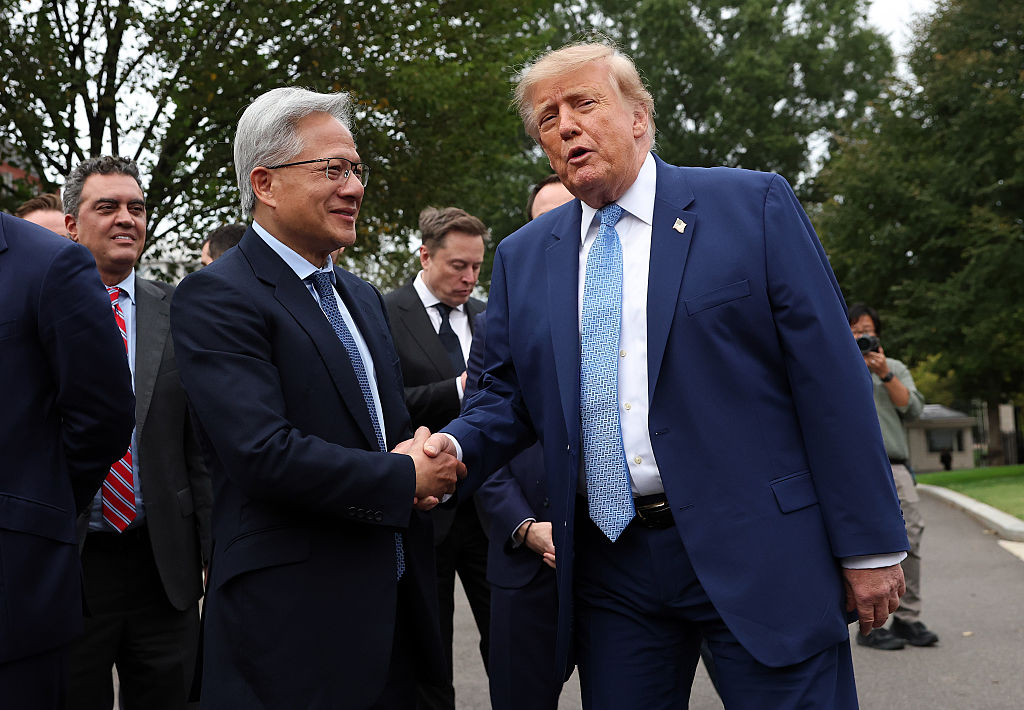
Eleven days. That’s how long it took Jensen Huang to return to his post of CEO of Nvidia after resigning in the wake of an alleged espionage scandal that rocked the business, tech, and policy worlds.
Visit turconews.click for more information.
On Nov. 12, Huang stepped down from the company he co-founded in 1993 after acknowledging an extramarital affair with Alice Huang, a Chinese national whom U.S. intelligence officials reportedly suspected was a Chinese spy. Her former company, Megaspeed, is also under criminal investigation over possible export-control violations. (The two Huangs are not related.)
But on Monday, Nvidia’s board announced that it had unanimously reinstated Huang after receiving “input from senior levels of the United States government” that his reinstatement “poses no national security risk.” Donald Trump personally claimed credit for the reversal, telling CNBC that “I convinced them” and “I made the deal.”
The stock market surged, with Nvidia shares rising more than 30% as trading opened Monday. The broader market has now recovered more than half of last week’s plunge, temporarily easing fears that an AI slump could lead to a recession.
But Nvidia and Huang still face an uncertain and treacherous path forward. Here are six big questions about his return.
What role did Trump play in Huang’s return?
Just a week ago, the NVIDIA board made it clear that it intended to turn the page on the Huang era. At the company’s Q3 earnings call on Nov. 17, chairman Harvey Jones told investors that the board did “not intend to reinstate Huang,” despite the fact that the former CEO was angling for a return.
The board had plenty of reasons to not want him back. Reuters reported that Huang had misled several company leaders about the nature of his relationship with Alice Huang. Separate reports emerged alleging that Jensen Huang had relationships with two Nvidia employees, including Kimberly Powell, a vice president who reported to him.
But the board also faced intense pressure to reinstate him. An online campaign attracted more than 180,000 signatures, including from executives like Elon Musk and people identifying themselves as Nvidia employees.
And most centrally, President Trump said Monday that he personally intervened. Trump told CNBC that he had spoken to Nvidia’s board “directly and indirectly,” and that Vice President JD Vance was also involved in discussions. On Monday morning, Trump indicated to a reporter that he knew Huang would be reinstated before the news broke.
Notably, the board reinstated Huang before completing its independent investigation. Directors said a series of meetings had satisfied them about Huang’s “candor and ability to lead,” and that senior government officials had assuaged their national-security concerns. They did not identify those officials or explain what information they supplied.
The swift about-face has provoked questions even from Republicans. "Who in our government weighed in? What did they tell the board? And on what basis did the board conclude there was no risk?” wrote Utah Senator John Curtis.
What did U.S. intelligence actually find?
It remains unclear what U.S. intelligence discovered about Huang’s relationship with Alice Huang—and how damaging its findings were. The New York Times reported Sunday that Alice Huang remained in contact with an officer of China’s Ministry of State Security from the spring of 2025 through the fall of 2026—a period overlapping with her affair with Jensen Huang.
But the intelligence community has not publicly established that she knowingly acted as a spy, and Beijing has denied the allegation. Trump wrote on Truth Social on Monday that Attorney General Todd Blanche did “not possess evidence” that Huang engaged in unlawful conduct.
However, a slew of questions remains unanswered. Jay Clayton, the Director of National Intelligence, said on Sunday that an investigation into Alice Huang and her firm Megaspeed was ongoing. And more reporting continues to be published about the complex relationships between Megaspeed, the Chinese government, and various Chinese AI companies. Bloomberg, for instance, reported that a company founded by Alice Huang procured Nvidia chips installed at a Shanghai data center connected to the Megaspeed network.
How will the move impact the Trump administration and U.S. export policies?
The Nvidia scandal has exacerbated deep fissures within the Trump administration over China. More laissez-faire members of the administration, exemplified by Commerce Secretary Howard Lutnick, are happy with Nvidia selling some of its chips to China, which they argue is good for U.S. business interests and keeping China hooked on American technology.
But the Nvidia scandal empowered a competing faction of China hawks, who argue that Trump should take a more adversarial stance. Four days after Huang resigned, the Commerce Department issued a rule intended to close a major loophole that allowed Chinese companies to access restricted American chips remotely through data centers in third countries.
With Huang back in charge at Nvidia, the balance could tip back in his favor.
How will Nvidia respond internally?
The scandal has also revealed cracks within Nvidia, the world’s top chip supplier. It’s no secret that Huang has always been the culture-setter for Nvidia and its hard-charging, relentless work ethic. But recent reporting, especially from the Times, alleges that Huang crossed a line into public humiliation, threats, and verbal abuse.
Now that Huang is back, will his power be checked—or unleashed? The board, in its statement, stressed more oversight, including a new committee of independent directors that will oversee national-security and export-control risks, and a chief compliance officer who reports to a board committee.
But Huang has now survived a seemingly insurmountable crisis with the support of the president and other Silicon Valley power players. That could make him more difficult to restrain, in a manner similar to how Sam Altman returned to OpenAI with a reconstituted board that left him more powerful than before his ouster.
Lindsey Stewart, director of institutional insights at Morningstar, an investment research company, says that the fact that Huang was reinstated before his investigation was concluded “is going to add to those corporate governance questions that investors have"—especially given that the company is "exposed to several material risks."
What congressional scrutiny will Huang and Nvidia face?
As Huang resumes the role of helming one of the biggest companies in the world, he will also be pulled away from his desk to Washington to answer questions from irate policymakers. He has agreed to a transcribed congressional interview on Dec. 1 before the House Intelligence, Foreign Affairs, and China committees, and has also been asked to appear on Dec. 3 in a public Senate hearing.
That scrutiny will likely increase in January, when Democrats take control of both chambers of Congress. Many Democratic candidates ran on platforms of accountability and rooting out corruption. Lawmakers have already demanded that the administration preserve records involving Nvidia, Megaspeed, Huang’s communications with Trump, and the government’s export-control decisions.
“Congress must get to the bottom of what’s going on at Nvidia. Jensen Huang must testify under oath,” Congressman Greg Casar wrote in a statement on Monday.
Investigators may also examine Trump’s financial interest in Nvidia. Public disclosures show that he bought between $1 million and $5 million of Nvidia stock in the days before his administration rescinded a Biden-era chip rule in May 2025, and made at least three additional purchases shortly after announcing that Nvidia could sell H200 chips to China. White House representatives have stated that Trump’s holdings are managed by independent advisors.
What does this episode mean for the AI economy?
Huang’s return stopped the stock market bleeding on Monday. Longterm, his presence could be enormously beneficial to an industry that critics feared was on the verge of bursting. Huang has long played the role of AI’s chief investor, salesman, and diplomat.
But his return also revealed how concentrated the entire American economy has become—and could provoke a larger backlash from a public that already is skeptical of AI leadership and how much power they hold. A survey from Athena Insights last week found that more than half of respondents oppose Huang’s return, and believe the affair to be a serious national security issue.
“From the standpoint of both democracy and healthy financial markets, no one person should wield that kind of influence,” says Aya Ibrahim, Senior Fellow at the AI Now Institute.