Sushil Mohta Optimistic About State Government's Progressive Vision For Urban Development: West Bengal's Land Reforms
· Free Press Journal
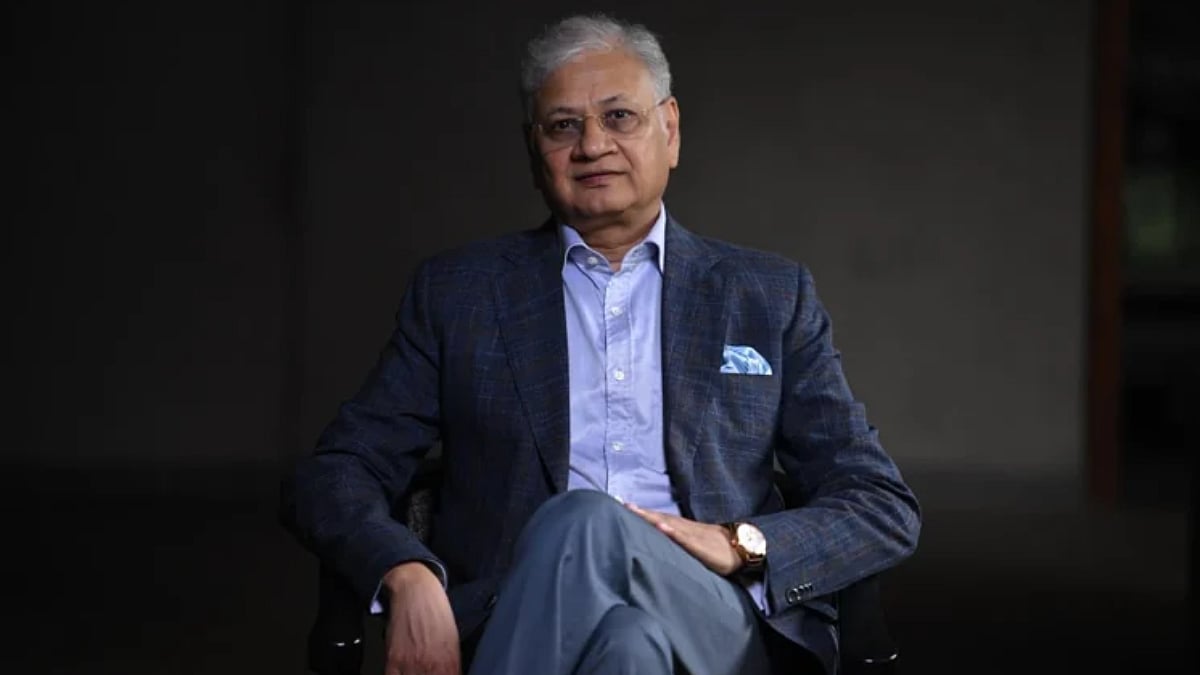
Sushil Mohta, Chairman of Merlin Group and President of CREDAI West Bengal, expresses strong optimism about the West Bengal Government's proactive approach towards land reforms, modern township policies and investment-led urban development.
West Bengal is poised to enter a promising new phase of urban and economic development, with the State Government's proactive approach towards policy reforms generating renewed optimism among industry stakeholders. The growing emphasis on investment, infrastructure development and ease of doing business presents a significant opportunity to unlock the state's vast potential in real estate, industrial development and urban infrastructure.
Visit sportbet.rodeo for more information.
Among the industry leaders expressing confidence in this evolving policy environment is Sushil Mohta, Chairman of Merlin Group and President of CREDAI West Bengal, who believes that progressive land reforms, supported by a comprehensive urban development policy, could become a major catalyst for the state's economic transformation.
According to Mohta, the government's willingness to examine longstanding regulatory challenges and explore development-oriented reforms is an encouraging beginning. He remains hopeful that the administration will introduce measures that facilitate organised real estate development, attract private investment and generate employment opportunities across West Bengal.
A Promising Beginning for West Bengal's Land Reforms
The renewed discussion surrounding the Urban Land (Ceiling and Regulation) Act, 1976, represents an important development in West Bengal's urban policy landscape.
Originally introduced to prevent excessive concentration of urban land ownership and encourage equitable distribution, the legislation has remained applicable in West Bengal despite the enactment of central repeal legislation in 1999.
Over the years, the requirements associated with the legislation have presented challenges in assembling large, contiguous land parcels for integrated townships, commercial complexes, industrial parks and modern residential developments.
The State Government's reported consideration of reforms to the existing land ceiling framework has therefore generated considerable interest within the real estate industry.
Sushil Mohta views this initiative as a positive indication of the government's commitment to modernising the state's regulatory environment.
He believes that a progressive and transparent land policy, combined with efficient administrative processes, could strengthen investor confidence and accelerate the development of planned urban infrastructure.
Rather than viewing land reform as an isolated legislative exercise, Mohta advocates a holistic approach that integrates land availability, infrastructure, financing, utilities and project approvals.
Sushil Mohta's Confidence in the State Government's Reform Agenda
As President of CREDAI West Bengal, Sushil Mohta has consistently advocated development-friendly policies that can strengthen the state's competitiveness while supporting sustainable urbanisation.
He believes that the present State Government has an important opportunity to establish a progressive framework for land and urban development, drawing upon successful practices adopted in other Indian states while addressing West Bengal's distinctive requirements.
The government's emphasis on investment promotion and governance reforms has created expectations of a more enabling business environment.
In its November 2026 policy representations, CREDAI West Bengal welcomed the government's focus on investment and administrative reforms and expressed its willingness to work constructively with policymakers.
Mohta has emphasised that the real estate industry does not seek financial subsidies. Instead, it looks forward to transparent regulations, timely approvals and a predictable policy environment that can encourage long-term investment.
As he stated in CREDAI West Bengal's policy communication:
"Real estate is not just about buildings. It is about jobs, revenue and the future of our youth. The sector seeks no subsidies. All it asks for is the right policies."
This approach reflects an industry keen to partner with the government in translating policy reforms into tangible economic and social benefits.
Land Reforms Can Unlock West Bengal's Economic Potential
The significance of land reforms extends far beyond the real estate sector.
India's economic structure has undergone a fundamental transformation, with services emerging as the principal driver of growth. According to the Economic Survey 2025–26, the services sector contributes approximately 56.4% of the country's Gross Value Added.
The expansion of IT and IT-enabled services, financial institutions, organised retail, logistics, hospitality, healthcare and education depends considerably on the availability of modern urban infrastructure.
Office complexes, commercial centres, shopping malls, logistics parks, industrial facilities and residential townships provide the physical ecosystem necessary for these industries to flourish.
Sushil Mohta believes that West Bengal is well-positioned to capitalise on these opportunities, particularly because of Kolkata's established commercial base, skilled workforce, educational institutions and strategic location in eastern India.
A modern land policy could facilitate the creation of larger, better-planned developments while encouraging private investment in infrastructure and associated services.
The economic benefits could be substantial. Industry estimates cited by CREDAI West Bengal suggest that real estate and construction collectively employ approximately 70 million people across India, with employment potentially approaching 100 million by 2030.
A NAREDCO–Knight Frank assessment also estimated that states and Union Territories collected approximately ₹2 lakh crore in FY2022–23 through stamp duty, registration charges and land-related revenues.
For West Bengal, a stronger real estate ecosystem could therefore contribute to employment generation, government revenues and the expansion of numerous allied industries.
Acropolis Mall and Merlin Rise: Illustrating Kolkata's Urban Transformation
The changing urban landscape of Kolkata already demonstrates how organised real estate development can contribute to economic activity and improved urban lifestyles.
Acropolis Mall, developed by Merlin Group on Rashbehari Connector, has emerged as a prominent retail and lifestyle destination in Kolkata.
By bringing together organised retail, dining, entertainment and commercial establishments, the mall demonstrates how modern infrastructure can support businesses, generate employment and create vibrant urban spaces.
Similarly, Merlin Rise, the sports-themed residential development at Rajarhat, reflects the evolution of contemporary housing preferences.
With its emphasis on sports, recreation, community living and lifestyle amenities, Merlin Rise represents the growing demand for residential developments that offer more than conventional apartment accommodation.
These projects demonstrate the possibilities of planned development when suitable land, infrastructure and investment come together.
Sushil Mohta believes that a progressive land policy could encourage more such developments across West Bengal, helping create new residential, commercial and recreational destinations.
Importantly, such projects can also stimulate economic activity in surrounding neighbourhoods through improved infrastructure, local business opportunities and employment.
Learning from Other States While Building on Bengal's Strengths
Several Indian states, including Maharashtra, Gujarat, Karnataka, Telangana and Haryana, have introduced policy measures to encourage organised urban development and attract investment.
Their experiences offer useful lessons in township planning, land administration, infrastructure development and streamlined project approvals.
Pune, for instance, has emerged as a significant residential and commercial real estate destination, supported by its growing IT sector, manufacturing industries, educational institutions and infrastructure.
Merlin Group has expanded its presence in Pune through projects such as Ventana and Elementa 2.0, alongside plans for further residential and commercial development.
For Sushil Mohta, these experiences reinforce the importance of regulatory certainty and integrated infrastructure planning.
He remains optimistic that West Bengal can develop its own progressive policy framework, combining relevant national best practices with the state's unique economic, geographical and social strengths.
The government's proactive consideration of land reforms is therefore seen as an opportunity to create a more competitive and investment-friendly urban ecosystem.
The Need for a Progressive Township Policy
Another important area of reform advocated by CREDAI West Bengal is the introduction of a modern township policy.
Integrated townships have the potential to accommodate residential neighbourhoods, commercial establishments, educational institutions, healthcare facilities, recreational spaces and essential public infrastructure within planned environments.
Such developments can support the expansion of cities beyond their traditional boundaries while reducing pressure on existing urban centres.
However, developing integrated townships requires large, contiguous land parcels, coordinated infrastructure planning and clear regulatory guidelines.
Sushil Mohta believes that a well-defined township policy, drawing on relevant experiences from states such as Gujarat and Maharashtra, could encourage developers to undertake larger and more comprehensive projects in West Bengal.
Such a policy could also incorporate sustainable development principles, including green building practices, efficient water management, waste disposal systems, open spaces and environmentally responsible infrastructure.
With the State Government demonstrating interest in modernising the urban development framework, industry stakeholders remain hopeful that township reforms will receive due consideration.
A Comprehensive Approach to Land and Urban Development
CREDAI West Bengal has proposed a series of reforms aimed at improving the overall investment environment.
These include reviewing the Urban Land Ceiling legislation, addressing longstanding issues associated with barga land, facilitating the productive redevelopment of suitable land belonging to closed industrial units and introducing a modern township policy.
The industry body has also recommended time-bound, single-window approval mechanisms to reduce procedural delays and associated development costs.
Creating land banks supported by adequate infrastructure could further encourage investment in industrial parks, logistics facilities, warehousing and commercial developments.
These proposals are intended to complement the government's broader efforts towards improving ease of doing business.
For Sushil Mohta, the objective is to create an environment where responsible developers and investors can undertake long-term projects with greater confidence, while ensuring that development remains sustainable and inclusive.
Generating Employment and Retaining Bengal's Talent
One of the most important potential outcomes of progressive land reforms is employment generation.
West Bengal has a strong tradition of education, entrepreneurship, commerce and industry. Its skilled workforce represents a major advantage in attracting new businesses and investments.
The development of modern IT parks, commercial offices, industrial facilities, organised retail destinations and integrated townships could create employment opportunities across multiple sectors.
Sushil Mohta believes that strengthening the state's urban infrastructure will also help encourage talented young professionals to pursue careers closer to home.
As he observed in CREDAI West Bengal's November 2026 statement:
"With the right policies, Bengal can see organised, professional developers build the townships, IT parks and housing the state needs. That will create jobs at home and keep our young talent in Bengal."
The government's focus on investment and development, supported by appropriate land reforms, could therefore play an important role in creating a stronger employment ecosystem.
Sushil Mohta Envisions a New Era of Urban Growth in West Bengal
West Bengal's evolving land reform agenda offers an opportunity to strengthen the foundations of its long-term economic development.
With its strategic geographical location, established commercial infrastructure, talented workforce and growing demand for modern urban facilities, the state has considerable potential to attract new investment.
Sushil Mohta remains highly optimistic about the State Government's proactive approach and its willingness to consider reforms that can support organised urban development.
He believes that the government's initiatives, combined with constructive participation from industry stakeholders, can create a favourable environment for investment, infrastructure development and employment generation.
The introduction of progressive land policies, a comprehensive township framework and streamlined regulatory procedures could help accelerate this transformation.
For Sushil Mohta, the ongoing discussion on land reforms represents a promising beginning and an opportunity for the State Government and industry to work together towards unlocking West Bengal's vast urban and economic potential.
With sustained policy support, responsible private investment and a shared commitment to sustainable development, West Bengal can look forward to a new chapter of planned urbanisation, economic prosperity and inclusive growth.