Ramaphosa takes another stab at fixing SOEs
· Citizen
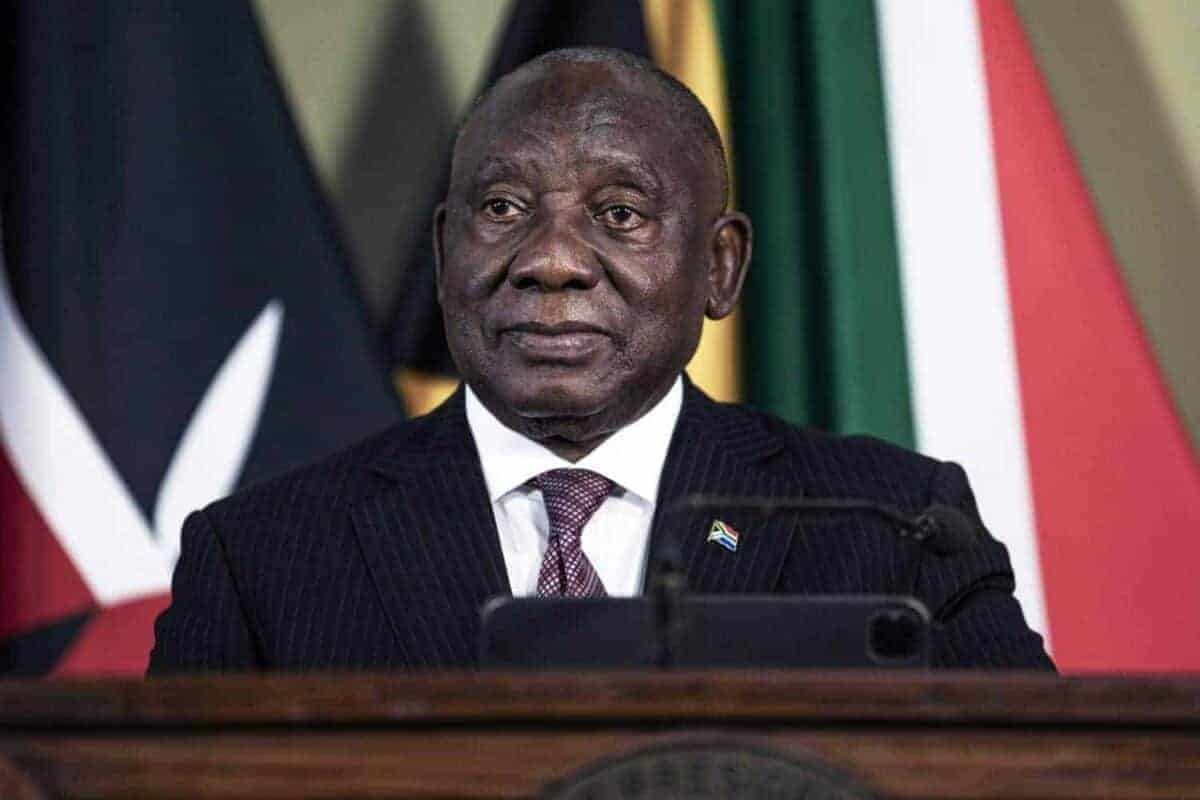
President Cyril Ramaphosa is set to oversee the financial performance, strategy and governance of South Africa’s ailing state-owned enterprises (SOEs) through a new Presidential Coordinating Commission that aims, among other things, to rescue them.
Visit saltysenoritaaz.com for more information.
Minister in the Presidency for Planning, Monitoring and Evaluation Maropene Ramokgopa confirmed to Moneyweb that a commission is in the pipeline, with her office set to make a proposal for it to Cabinet.
The commission might be operational from early 2027.
This is not the first time Ramaphosa has been front and centre of efforts to reform SOEs.
In December 2014, former president Jacob Zuma initially assigned Ramaphosa (then deputy president) to oversee the turnaround of key SOEs, including Eskom, South African Airways (SAA) and the SA Post Office.
This plan bombed, as most SOEs are basket cases. They have been a huge drag on South Africa’s economic growth and on public finances, as they rely on taxpayer-funded bailouts for survival.
National Treasury figures show that over the past decade, requests by SOEs for bailouts and debt takeovers have cost the fiscus R520.6 billion.
The proposed commission is the latest bid to get a firmer grip on the SOE universe.
In 2023, Ramaphosa’s administration published for comment the draft National State Enterprises Bill, which sought to move SOEs under one umbrella holding company with centralised control and governance.
However, Ramokgopa’s department withdrew the bill from parliament in September 2026 after it received widespread criticism for giving Ramaphosa too much power.
Under the bill, Ramaphosa and future presidents would be the sole representative of a holding company that would house SOEs, and would also have the power to appoint SOE board members.
This alarmed the investment community, which was worried about possible political interference in SOEs.
The government hasn’t given up on the bill, with Ramokgopa saying a new version will be introduced in parliament after cabinet approval. A new bill is expected “in the near future”, she said.
Purpose of the commission
In the interim, the government is proposing a different vehicle: a Presidential Coordinating Commission on SOEs.
Ramokgopa said the commission will be established by the president in terms of Section 84(2)(f) of the Constitution and will be chaired by the president himself.
The president would be supported by the minister of planning, monitoring and evaluation, the minister of finance, and members of the Presidential State Enterprises Council (PSEC), established six years ago and acting as an advisory body to Ramaphosa on SOEs.
“The establishment of the commission will provide a legislative framework for the estimated 720 entities at national, provincial and local government level,” Ramokgopa said in a written response to Moneyweb questions.
The commission’s mandate is sweeping, but its main aim would be to “reposition SOEs as effective instruments of economic development”.
It will be tasked with introducing an overarching act governing SOEs, finalising an appropriate shareholder ownership model, appointing competent boards and executives through a transparent process, clarifying the roles of the executive authority, boards and executives, and regularly reviewing remuneration guidelines.
“The mandate of the commission should be to provide political oversight and strategic management by strengthening the legislative framework governing SOEs,” Ramokgopa said.
She added that the commission will review SOE business models, capital structures and sources of financing to ensure that entities “operate financially sustainably”, and will identify opportunities for private sector participation.
It will also ensure that “SOE-specific interventions are implemented to stabilise companies through strengthening governance, addressing immediate liquidity challenges, implementing turnaround strategies, and investigating allegations and taking steps against those implicated in corruption”.
The commission will further “review the role and mandate of the SOEs to ensure a positive socio-economic contribution and alignment to national developmental objectives, including determining where initiatives/projects should be discontinued or additional initiatives/projects should be undertaken as well as where SOEs should be created or disposed of or wound up”.
It will review corporate plans “to ensure alignment to government priorities” and monitor “the operational and financial performance of the SOEs”.
It will also “implement PSEC’s recommendations and over time develop and transition into the final state of the centralised model in whatever form and format may be established”.
Industry response
On the question of which model the government prefers, Ramokgopa said her office has studied various international models, including those in Norway, China, Singapore and South Korea.
“It will be a hybrid model having certain elements of available models that are taking into account our developmental and business approach,” she said.
The commission will be supported by a secretariat located in the Department of Planning, Monitoring and Evaluation, responsible for technical analysis and coordinating meetings. It will submit regular interim reports and publish a final report at the end of its term.
Veteran economist Iraj Abedian has long argued that SOEs do not need more oversight from the government, but rather credible individuals to be appointed to their executives and boards.
Abedian, who served on the Transnet board from 2004 to 2009, said the fundamental problem is not a lack of political oversight but a failure to run SOEs as commercial entities.
“The first prize back then, when I served at Transnet, was for SOEs to be financially sustainable, generate profits organically, and be accountable when there were failures. SOEs had competent executives and boards,” he said.
“They were allowed to operate without any interference. This is what SOEs need.”
This article was republished from Moneyweb. Read the original here.