In India, “Cockroaches” Are Leading the Fight for Democracy
· Jacobin
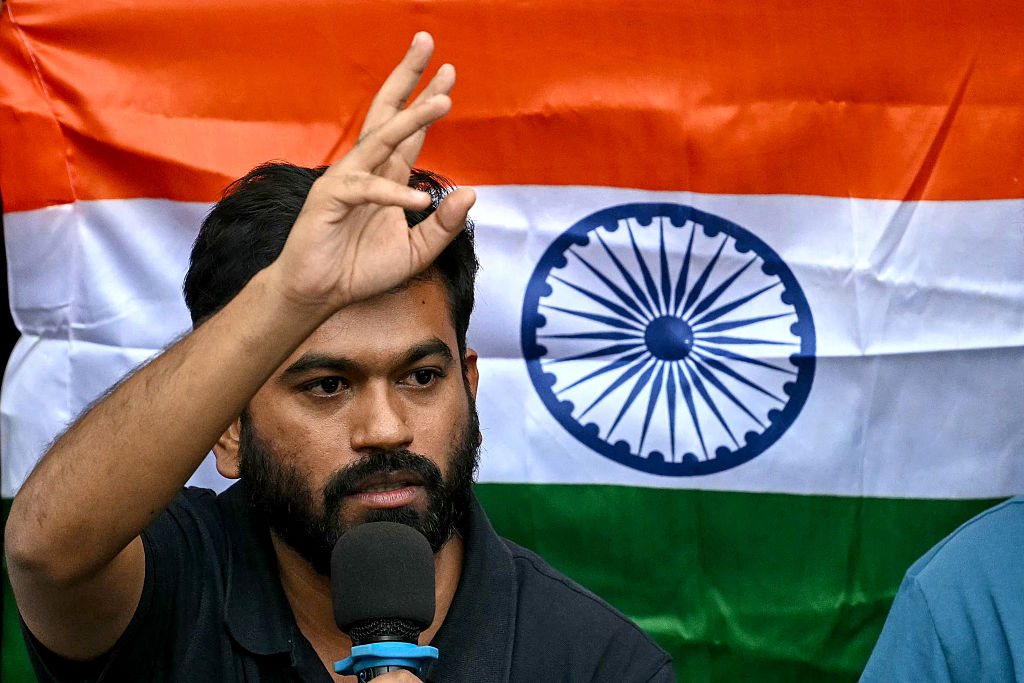
On October 10, India’s capital city, New Delhi, was turned into a fortress as protesters tried to oppose a countrywide exercise to revise the electoral rolls. The protests were called by the Gen Z movement known as the Cockroach Janta Party (CJP), working with left-wing student groups, which forced the resignation of the minister of education in July.In response, the Indian government deployed more than twenty thousand police officers and paramilitary personnel, suspended internet access in central Delhi, and barricaded the city center. Thousands of protesters, including the leaders of the CJP and prominent opposition politicians, were detained.The protests stem from a massive government effort, known as the Special Intensive Revision (SIR), to revise India’s electoral rolls by removing dead, duplicate, and ineligible voters. Concerns intensified in the last month that under the SIR eligible voters are losing their right to vote, with 130 million names left off the draft electoral rolls since the start of the program.The events of the last year are part of a larger pattern that has cast doubts on the legitimacy of India’s elections. There are growing fears the SIR was designed to advance Prime Minister Narendra Modi’s goal of a centralized and authoritarian government. Evidence suggests that it handed Modi’s Bharatiya Janata Party (BJP) an electoral advantage in recent state elections by removing voters from marginalized communities, including Muslim voters.The Gen Z protests have garnered support from a broad spectrum of opposition parties, including those on the Left. But the real energy of the protests is coming from the ingenuity and irreverence of young Indians who have flooded the streets of New Delhi despite the violent crackdown. In a country that has long touted itself as the world’s largest democracy, the developments are striking and could prove a turning point for its future.How Modi Changed India’s ElectionsWhile the electoral rolls in India are revised every year to add new voters and remove people who have died or moved away, the SIR, which launched back in June 2025, has inverted the voter registration process for the first time in the country’s history. Instead of election officers verifying voters at their homes, the SIR asked voters to fill out a form and prove their eligibility to vote. Voters are matched against records from a previous SIR conducted between 2002 and 2004 and in many cases asked to provide documents showing they are eligible to vote. Critics of the SIR claim that it is stripping eligible voters from the rolls.The SIR is the work of the Election Commission of India (ECI), the country’s chief electoral body, which oversees national elections and provincial elections, including in states with populations larger than California’s. The commission is led by a three-person panel whose chief, like a Supreme Court judge, can be removed only if the Parliament impeaches them.In a key development in December 2023, the Indian government passed a law making changes to the selection process for choosing election commissioners. The result is that the executive branch of the government now has the most influence in the process. The same law also quietly inserted a clause giving these commissioners legal immunity. Making matters worse, the election commissioner responsible for introducing the SIR, Gyanesh Kumar, just so happens to be the first chief election commissioner appointed under the new law, raising questions about what’s really going on.How Centralization of Voter Rolls Could Thwart Democracy in IndiaCriticism of the SIR intensified after The Indian Express reported on September 23 that two of the three election commissioners were sidelined despite raising objections at least fourteen times about the exercise. Among their criticisms were concerns about the process in which new voters were registered, how names were deleted and restored, who had the power to file appeals against restored voters, and who had access to the voter database.The electoral body has maintained that access to the voters’ list is secure and decentralized, meaning that local electoral officers make the judgment on who stays on the voter list. But the revelations in The Indian Express showed that the SIR was relying on ECINET, a digital platform that logs voters. The result is increasing centralization, giving more control over the voter rolls to the commission’s headquarters in Delhi. In one instance, the newspaper documented that officials in the state of Goa flagged ninety-seven voters who were mistakenly removed. Despite eight emails from Goa’s chief electoral officer to officials in New Delhi, the voters were knocked off the rolls when the deadline passed.India’s principal opposition leader, Rahul Gandhi of the Indian National Congress, alleged that the additions and deletions of voters were undertaken as an exercise to disenfranchise a section of voters critical of Modi’s BJP. In the state of West Bengal, the exercise removed some nine million names from the electoral rolls in the months before the state elections in April 2026. Modi’s BJP won power in the state for the first time in the election. Thirty-four percent of those removed from the rolls were Muslim even though they make up just 27 percent of the state’s population. The BJP has maintained that many Muslims eliminated from the lists were “illegal Bangladeshi migrants,” even though evidence has shown scores of Indian nationals were also removed. Of the few appeals tribunals have decided — under 3 percent of some 2.5 million — about 90 percent ended in restoration.With the BJP falling short of a majority in the 2024 general election, the stakes are high for Modi. The party was forced to form a coalition with regional allies that do not share a Hindu-nationalist ideology. The opposition alliance led by Gandhi’s Congress won 234 seats, thirty-eight seats shy of a majority, despite the Congress having its bank accounts frozen and being comfortably outspent. The result is that for the first time in years many Indians are no longer afraid to openly criticize their government — they are even prepared to fight back.The Rise of India’s Cockroach MovementIn May, the curiously named Cockroach Janta Party (CJP) first made global headlines after it hit roughly fifteen million followers on Instagram in a week — then again at the end of July after it forced the resignation of India’s minister of education, no small feat. Though the CJP appeared to come out of nowhere, it was the result of long-simmering tensions in India. It started as a satirical joke made by Abhijeet Dipke, an Indian student in Boston, after India’s chief justice, Surya Kant, likened unemployed young Indians questioning the government to “cockroaches” and “parasites.” Dipke posted a comment on X, “What if all cockroaches came together?” and millions responded. He returned from Boston to New Delhi on June 6 and headed directly to Jantar Mantar, launching a protest against the government’s mishandling of a competitive public exam.Though he had limited experience in political organizing, Dipke joined hands with left-wing student organizations in New Delhi. Their first protest lasted thirty-six days and attracted people from all over India and from all walks of life including a vast number of students, exam aspirants, schoolteachers, construction laborers, activists working with civil society organizations, Dalits, Muslims, and other social minorities.By taking up the issue of competitive exams, the movement’s leaders tapped into frustration among young people in India who have seen pathways to social mobility fall apart in recent years. Among those with graduate and postgraduate degrees, the rate of unemployment is particularly high. More than twelve million candidates applied for 8,868 openings in the state-owned Indian Railways company in 2025. The unemployment crisis is further compounded by the high cost of living, hikes in petrol prices, and the effects of pollution, which has left a near-permanent industrial haze over many Indian cities. The country has touted 7.7 percent growth in GDP numbers for the last fiscal year while ignoring persistent inequities on the ground.A Democracy Under Mortal ThreatDespite well-documented inequalities in the country, India has long maintained an orderly and transparent electoral process. But a generation of political observers have now witnessed the erosion of once powerful institutions and the threat of detentions and police action against dissenters.In 2019, as Modi ran for a second term, the Election Commission cleared him in six separate complaints that he had violated the election code of conduct. In his second term, he further undermined the independence of the selection of election commissioners, seen as a fresh attempt to tip the political playing field in favor of his party and turn India into a one-party state. Then in 2024, Modi led an even more divisive campaign even as his opposition decried inaction from the election commission. The SIR exercise too has invited widespread public anger since it asked citizens to submit multiple documents simply to prove their eligibility to vote. In some cases, it even forced people identified as dead to come forward to prove that they were, in fact, alive.On September 24, a day after The Indian Express broke the story on the many inefficiencies of the SIR, Abhijeet Dipke and the Cockroach Janta Party called for a protest seeking the removal of the chief election commissioner, Gyanesh Kumar, and the rollback of the SIR process. And with that, the “cockroaches” kickstarted an even bigger public outcry.Mass Protests Are Needed to Protect Voting RightsAs with the summer protests over education reforms, the Gen Z movement hoped to channel the growing anger in India over the undermining of democratic elections. Alongside the Cockroach Janta Party, the left-wing student organization All India Students’ Association (AISA) was credited with some of the more robust protest actions in the past week. AISA is the student wing of the Communist Party of India (Marxist–Leninist) Liberation, and its cadre have had to use all their experience, discipline, and political commitment in organizing mass collective actions in the protests.“[The protests] have opened democracy’s Pandora’s box to talk about all the other ways we can ask for accountability,” said Neha Bora, the president of AISA, speaking to Jacobin before this month’s protests. “The energy from this movement should be put into struggles to build our country anew. . . . We know that every mass protest is the possibility of something new and reinforces the idea there could be an end to this violent period.”The movement’s leaders, including Dipke of the CJP and Bora of AISA, announced a united mass protest on October 10. In response, police in India detained over ten thousand people across the country. Then on the day of the protest, the government deployed the overwhelming force of twenty thousand police and paramilitary personnel in order to prevent protesters from gathering in the city.The unprecedented crackdown has done little to stem the tide, as the opposition parties led by Rahul Gandhi held a protest of their own, marching to the Supreme Court on October 12 along with thousands of people. The sheer number who took to the streets this week was reminiscent of previous mass outcries in the Modi era against the disenfranchisement of India’s Muslim community, and against laws that would have left farmers vulnerable. But those protests faced a similar crackdown from the BJP: smear campaigns against the leaders, the use of excessive police force to stop demonstrations, and the eventual arrest of activists under anti-terror laws. Muslim activists and intellectuals like Sharjeel Imam and Umar Khalid have been jailed without trial for six years.However, the Gen Z movement has posed new questions to the BJP and has made it difficult for the party to control the narrative, despite its influence over mainstream television news channels in India. TV news has tried to paint the protesters as agents of India’s supposed external enemies like Pakistan and China. But the arrest of two of the Cockroach Janta Party’s leaders, Saurav Das and Ashutosh Ranka, while they were holding the Indian national flag has made that charge hard to sustain.The movement has not only been able to rapidly form a broad coalition on common social interests; it has also mobilized concerns shared by young Indians across religion, caste, and class divides. It has offered Indians the first real sign of lasting political change — little wonder that Modi is now throwing the full might of the state against them.This article originally appeared in Jacobin, a democratic socialist magazine publishing long-form essays and analysis on politics, economics, and culture. Subscribe to the print edition for $20 a year.
Visit sports24.club for more information.